Suggested Reading For Elementary Students


Reading5Summer is here and you want to keep your elementary students engaged and reading with these great summer books!

Popular Clone, by M.E. Castle
Protagonist Fisher Bas is a nerd, but he blames his bookishness on his family. With a Nobel laureate mother and a scientist dad, he’s probably right! Fisher uses his natural talents to overcome the difficulties of elementary school by cloning himself so he can send his clone to school while he stays home and plays video games. This book is a great read for those who are struggling to get into books or with social situations.

The Candymakers by Wendy Mass
This is a fun read about four elementary school students who set out to make the ultimate candy. Through their experiments, the reader gets to learn about candy making and science which is what this art is based on. This book is so engrossing, you won’t be able to put it down! Try some candy recipes of your own when you’re done.

The Worst Case Scenario Ultimate Adventure: Everest by David Borgenicht and Bill Doyle
This choose-your-own-adventure book is a great read for those who enjoy sport, adventure and travel. You will be the youngest member of a team who will be attempting to climb Everest. The team’s success depends on your choices, so think carefully! This is a cliff-hanging thriller from start to finish!

Where the Mountain Meets the Moon by Grace Lin
This is a delightful account of a Chinese family’s legacy. Minli is enthralled by her father’s bedtime stories about a poor dragon and the old man in the moon. When she sets out to change their fate, and the fate of her family, she has an epic adventure filled with stunning illustrations and incredible characters. This is a really special book that you will find enchanting and touching.

Drizzle by Kathleen Van Cleve
If you loved the Wizard of Oz, you will adore Drizzle. It’s an eclectic mix of humor and imagination that will have you skipping through the crazy farm that Polly lives on. Here bugs can talk, rhubarb tastes like chocolate and the balance of nature keeps everything in check. When the daily drizzle ends, things start to go horribly wrong and Polly must restore the natural balance in order to save her brother’s life.

100 Cupboards by N.D. Wilson
When Henry York opens a cupboard, he discovers a portal to a whole new world. This is the first in a trilogy that is as thrilling an adventure as you have ever been on. When Henry’s family goes missing, he discovers the 100 cupboard doors, each cupboard leads to a new world, but Henry must figure out which ones his parents are in and how to get back to his own world. This series is thrilling, scary and gripping, so be prepared to buy all three books before the summer is though!

Leave a Comment

Filed under Learning Resources, Parenting

Exam Prep 2013


It’s so close to summer vacation that you can almost taste the slurpies and smell the sunblock, but before we get there, we have to get through exams. Exams are the best way to test large volumes of students, but they certainly aren’t always a reflection of your abilities. Still, mastering the art of exam preparation will mean that you do your very best and that will help to improve your marks. Just like you learn how to drive or swim, you need to learn how to take exams too.

Eat right
Sure you want to live on a diet of energy drinks and candy, but this is no way to fuel your brain. If you were running a marathon, you’d carbo load and hydrate and you need to do the same with your mental workouts. Your brain needs protein and carbohydrates to function optimally, without sufficient fuel, you won’t be able to think fast and you’ll feel tired too. Eat a healthy, balanced diet and drink your eight glasses of water a day.

Sleep tight
Who has time for sleep? You do. Pulling an all-nighter to study for an exam will leave your brain so tired that you won’t have access to the higher cognitive functions you need to perform at your peak. All that information you crammed into your brain at the last-minute will be pretty useless if you can’t access it or use it effectively, so make sure you get at least eight hours of sleep before an exam. Can’t sleep because exams make you anxious? Add some lavender to your diet to calm your nerves.

Organize
Exams are stressful enough without having to rush around on the morning before your big test. Get organized the night before. Make sure you have decided what to wear, that you have everything you need (don’t forget calculators, pens and other accessories) and that you have a ride to the exam venue that is reliable. Set an alarm and make sure that you have everything you need.

Put your game face on
Don’t get yourself worked up by asking your friends what they learned and worrying that you have studies the wrong things. Keep calm and breathe.

While a coffee may seem like a great way to start the day, make sure you drink it at least 1 hour before the exam so that you won’t need to use the bathroom.

Think about all the studying you have done and work you have completed throughout the year to get to this point. Don’t worry about anything; being anxious will negatively affect your performance and relax… you’ve got this!

Note: Adapted from the Tutor Doctor Corp post of June 17, 2013

Leave a Comment

Filed under Academic Advice, Education, Test

Sunday Morning Shout Out


Many parents ask what they should get their children’s teacher at the end of the school year.  One year, my daughter’s teacher shared her own gift of kindness when she graciously accepted our homemade, laminated place mats. There have been the other homemade treats, with a side of egg shells, that were also well received.   A few years in a row, there was the gift of clove apples, after a Little House on the Prairie kick. With a nod to reading, my girls’ teacher appreciatively and pleasantly received their fragrant fruit.

My parents always played it safe and sent us in with plants for our teachers. It didn’t hurt that they had a side floral and plant business, outside their regular jobs.  After deciding a large bottle of alcohol was a tacky choice, albeit one some parents and teachers might pick on a bad day, I decided to do some online investigating.   The Great Schools staff at recently featured an article titled ‘If you give a teacher a cookie…‘ that discussed what teachers really appreciate. Some things that were mentioned included nixing the homemade goodies. While the article did not mention my girls’ egg shells, it did mention the fact that many teachers get inundated with baked goods and truthfully do not eat them all. It suggested if you go homemade and edible, to go for something with a longer shelf life, like jam or a sauce.

Similarly, it suggested plants, over flowers because of a longer lifespan.  One year my oldest gave her teacher a potted plant with some personalized art on it. That following fall, the teacher told me how well the flower did in her garden, all summer long.  Another possibility that was mentioned was a gift card. As you may or may not know, teachers spend a lot of their own money on classroom supplies. A gift card to a favorite bookshop, coffee place, restaurant, or store is a welcome treat and break for a weary teacher, whose extra energy and money go into their classroom. Other ideas include the group (I love this phrase) “love bomb” where the class goes in on a large gift for their teacher; classroom supplies-the most practical, if not least exciting gift; and last but not least the heartfelt, sincere card or picture of thanks. Teachers in this article were most touched by heartfelt appreciation and gratitude, that crayola colors and little hands so wonderfully do.  This has been my go-to item many times. In these tough economic times, but really in anytime, where such dedicated people work so hard with our children, and have received a lot of flak from certain segments in society, I think cards/pictures of appreciation are great! Remember great doesn’t have to be expensive or even bought.

The articles ‘Teacher gifts with the homemade touch‘ and ‘Last minute teacher gifts‘ at the Great Schools website offer up some other good ideas for fretting parents.

HAPPY FATHERS DAY!

Leave a Comment

Filed under My Experiences, Parenting

Natural Disaster Plans: Your Families Preparation


As we head into hurricane season and with a number of tornadoes, floods, wild fires and high wind events already under our countries belts, it’s the perfect time to discuss emergency plans with your families. Being prepared and knowing what to do will help to keep your family safer in almost any emergency. Planning ahead for anything from earthquakes to fires will ensure that your children know exactly what to do, where to go and who to contact for help.

Emergency evacuation plan:  Discuss with your children the best ways to evacuate the home should a fire or other emergency occur. Discuss ways in which they can safely exit, no matter where they are in the house. For example; if they are in the basement, they can either exit through the door or out a window.

Emergency Supplies:  Pack an emergency bag which contains a first aid kit, a radio, flashlights with extra batteries, water and food for three days, pet food and blankets as well as rain gear. Each family member should know where to locate this emergency bag.

Meet up point: If a storm or other emergency occurs when you are away from home, agree on a familiar place for the family to meet up. Ensure that your children are able to navigate to this area from school and other common destinations.

Emergency numbers: Ensure that all relevant emergency numbers are programmed into cell phones, written in notebooks, are up to date at the school, are posted near the phone and in the possession of all care givers, teachers and coaches.

Basic skills: Discuss what to do in fires and ensure that all family members know where the fire extinguishers are. Also discuss what to do in floods, accidents, storms and earthquakes. Being prepared will mean your children know what to do and where to go in the event of an emergency.

Shelters:  Know where the shelters and hospitals in your area are. The last thing you want to be doing in an emergency situation is Googling a hospital. If you have pets, find a pet-friendly hotel in your area as shelters do not take pets.

First aid: It’s a really great idea to do a first aid course and to teach basic coping techniques to your family members. While you should always leave medical issues to a professional, its important to know what to do until help arrives.

Documents and Money:  Keep all your important documents such as birth certificates, deeds and passports in an easy-to-reach bag or a fireproof box. Also keep a bit of little money there to tide family members over in a difficult situation.

Being prepared won’t mean that emergencies don’t happen, but it will vastly improve your family’s safety. For more detailed information and ideas these are some sites with good information:

Leave a Comment

Filed under Health, Parenting

What To Do When Your Child Bullies


Bully-boyBullying is endemic and is something all parents should be concerned about. There’s so much help for students who are being bullied and their parents, but few of us take a moment to consider the bullies. If it’s your child that’s bullying, there are things you can do to remedy the situation.

The first reaction is (understandably) anger. You may feel angry that your child is being mean to other students or you may be angry about the accusations. If you are feeling angry, delay reactions until you feel less emotional about the situation.

Establish the facts
I have been a teacher for many years and its always amazing to me to see how differently students act as soon as their parents enter the room. While you may think that your child is incapable of violence, lying or meanness, you may be surprised at how they act when you are not around.  Talk to the teacher, talk to other students and (most importantly) talk to you own student to get a better understanding of what really happened before making any decisions or accusations of your own.

You should also establish whether the incident in question is an isolated one or part of a broader behavioural issue.  If the teacher and other students agree that your student has been a bully, it’s important to support the teacher and the school in their approach to bullying.

Teaching responsibility
It’s important to understand your student’s behavior. There are motivating factors for bullying and it’s crucial that you understand what those were so that you can address them too. No matter the motivation, your student must understand that they are responsible for their actions and the consequences of those actions for the students that they bully.

They must also understand that bullying is never an appropriate response to any situation. You can acknowledge the reasons why they bullied and offer other ways in which their frustrations or hurt feelings can be addressed. Its not simply enough to say that behavior is not OK, you must offer alternatives.

Coping mechanisms
Find out what sort of things trigger your student’s bad behavior. Discuss and role-play coping strategies. This could mean counting to ten or walking away when they are angry. Once your students have regained control of their emotions, discuss ways in which they can deal with situations in a more responsible and constructive ways.

Remember that most students have their reasons for bullying. While this behavior is never, ever OK, addressing the root causes and replacing this negative behavior with other coping mechanisms will help to solve the problem over the long term. Any student who bullies another needs help. If your efforts are not successful ensure that they get help from a councilor as soon as possible.

Leave a Comment

Filed under Parenting, School Safety

Key Indicators of Apserger’s Syndrome


AspergersAsperger’s syndrome is one that affects the social interaction of students that are otherwise smart and capable.  Their inability to react appropriately to social cues and engage in small talk may leave them misunderstood and marginalized. Like autism, Asperger’s syndrome is on a spectrum which can make it difficult to diagnose.  This is because each case is unique and symptoms can range from mild awkwardness to an inability to function socially.  Still, there are some key indicators that can help parents and teachers to identify possible Asperger’s cases and send students for evaluation.

Early detection of Asperger’s is the best case scenario for students who can then learn coping mechanisms that can see most of them functioning normally in social situations.  Of course having any of these indicators doesn’t mean that your student has Asperger’s syndrome and accurate diagnosis will have to be made by a professional.

Social interaction
Does your student play with others? An inability to play pretend games or utilize creativity can be easily masked by mimicking the play of others. Students who have Asperger’s may also parrot lines from books, TV shows and movies (often verbatim) that are similar to the situations they find themselves in. Abstract, creative imagining doesn’t come naturally to them and this may limit their ability to play with others at a young age.
This is not to say that children with Asperger’s don’t play, they do play with their toys and even with you. What you need to do is try to play with them as their peers would. You can also test their reactions by suggesting a different pretend game or asking to play with other toys. Because students with Asperger’s don’t know intuitively how to fit in with these games, they like to play the games that they understand and are familiar with. Suggesting a new game, a different toy or introducing a new character or scenario into an existing game often throws them off guard and may cause them to get upset.

Awkward conversation
Students with Asperger’s also find small talk and conversation difficult. While they are able to talk endlessly about topics that they have learned, they are not adept at the art of conversation. They find it difficult to make small talk, and will only answer questions in concrete, factual ways. While they may be able to go on about dinosaurs for ten minutes very comprehensively, you will find that the conversation ends abruptly if you change the topic.

Focused Expertise
Their focus on the concrete makes them especially adept at science and math. Students with Asperger’s may in fact be very clever and excel at subjects which require factual memory and concrete concepts. They usually have one field of expertise in which they excel and this makes them seem perfectly capable. While they are often very gifted and bright, it’s their social lives that tend to suffer most.

Students may also display OCD tendencies like ordering and organizing in order to make sense of the world.  They may suffer meltdowns when they lose a game, or when faced with change.  Many parents cope by allowing students to win rather than dealing with the root cause.

For most students, Asperger’s is a manageable syndrome that can be overcome. Through role-play and therapy, they become more adept at dealing with social situations and learn how to respond correctly to small talk and abstract inquiries. This is why early detection is so critical as it enables the student to better integrate into society before they becomes stigmatized or marginalized.

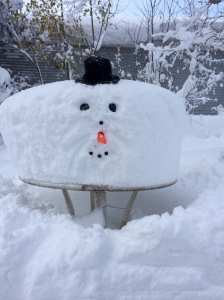
More information about Asperger’s can be found at WebMD, The Mayo Clinic, and Aspergers.com.  Dave Wellman wrote a very informative article on CNN about managing and understanding employees with Asperger’s. Titled ‘I hired someone with Asperger’s –now what?‘ the article starts with a great story of his child building a four foot snowman in his bedroom because it was cold outside. His child is autistic and the author conveys that his son’s rationale for building inside was that it was too cold outside.  Further in the article Mr. Wellman points out many aspects of Asperger’s that can be applied and used by parents and educators to better understand and educate a child or teen.

Note: Adapted from Tutor Doctor Corp. blog posted on 6/10/2013

Leave a Comment

Filed under Health, Improved Learning, Parenting

Adam’s Lessons


Tips For More Tips

Hospitality can be an extremely rewarding career even when you may even be a ‘mere’ waiter or waitress or bartender. Many people may regard these positions in the world as lowly or even unskilled labour. However, I would have to strongly disagree. As with any career option if you are good at what you do you’ll make money, and lots of it!  My brief experience plate wine glassshows this certainly applies to the service industry.  So get ready to get some insider tips on how to gain a higher percentage in tips from a collaboration of some of the top servers that work in top notch restaurants across North America, as well as what Food and Beverage managers look for when they hire these top notch sales people.

Tip 1 – Be passionate! Someone who can show a tremendous amount of passion and initiative of where they work, who they work with and what they serve are bound to do better in this industry. Would you rather have someone who had to look at the menu along with you as you asked them a question, or would you rather sit back, relax, and have someone describe every dish to you and be given personal recommendations? A personal trick of mine is to describe my ideal meal to the customer, I also go through the ideal wine pairings that we have to offer, and I welcome any questions a guest may have at the table whether it be about the property’s history, our Chef’s story or even the tasting notes of the foods and wines we offer. Sure I have other tables, but I appreciate the questions and helping you truly enjoy your experience does get me excited.

Tip 2 – Interact with your guests and be responsive to them. Essentially you are their guide through the process. Always introduce yourself in a polite and fun manner to get the guest warmed up to you. My ideal behind service is to create a friendship; this takes the pressure off of you being impeccable and creating an immaculate experience and creates the atmosphere that you are entertaining friends at your house. You’ll notice that your guests will tend to show their true colours and be more open to conversations with you rather than creating demands for you to fulfill. Another key piece of advice is to not treat every guest the same; if someone is showing interest in everything on your menu then talk to them, if someone doesn’t even look up at you when you first approach their table then try to stay out of their hair, they are most likely trying to have a nice private night out. The key to all service is that once you get into the market of fine dining the customers have selected to come to you, this puts them in your hands and you can guide them in any way that you want, as long as you don’t force them anywhere. This is the difference between you making a reservation and driving down the street, seeing the golden arches and thinking how amazing a burger would taste at that moment.

Tip 3 – Be fashionable! Once you get into the fine dining environment there are certain requirements to personal deportment, but there are some things you can get away with now that you couldn’t about 20 years ago. I have found the new theory to appearance to be that as long as you have no piece of fashion that could offend a guest then you are fine. At my restaurant I am able to have medium-long curly hair, a beard, an earring, and a watch as well as a bracelet. There are ways in which you can make today’s fashion appropriate for work, but you have to learn how, and once you can figure this trick out you’ll soon be able to get the tattoos that you want (I have three myself), the piercings (with some limitations, usually pertaining to facial piercings) and wear your hair in a neat fashion with limited colouring as well. It’s a sad thing to say, but all front of house staff are hired based on physical appearance, fashion and personality.  However, I do know that there are customers that really dislike body/face art and piercings and I can appreciate their feelings.

So take pride in being a front of house-er! Because you’ll find that when you move up the ladder you’ll really be missing the tips, pace and interaction with customers. Many of my ‘back of the house’ friends and managers especially miss the tips that annually can range from a low of $15,000 to well over $100,000/year with their tips (my friend who used to work at a prominent hotel in Toronto was able to amass a small fortune from their time spent in that hotel’s restaurant).

So to anyone who can still look down upon the person who takes care of them in a restaurant, I feel sorry for you, because they work excessively hard to make you as happy as possible, and if something goes wrong nine point nine times out of ten times it honestly isn’t their fault. My advice to students would be get a job as a bartender or server because it’s always nice to walk away with cash in your pocket at the end of every day AND it is a great way to improve your social skills.

Leave a Comment

Filed under Learning Resources, My Experiences